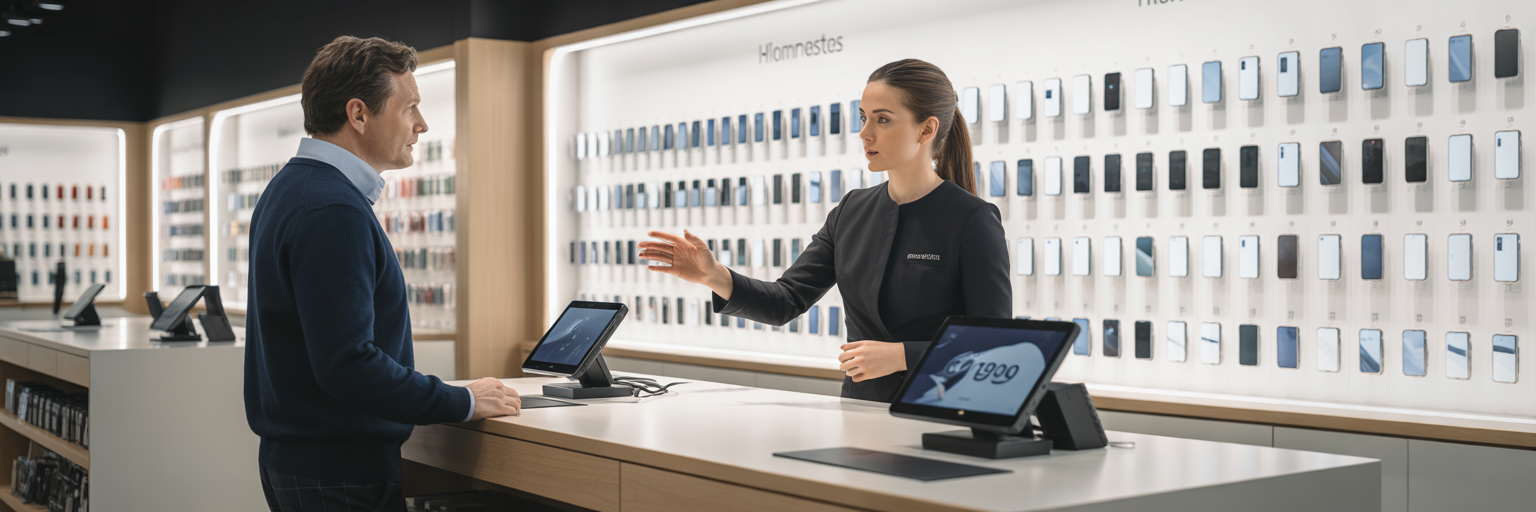
The Disconnect Between Sales Data and Customer Loyalty
For many retailers, the point of sale is an endpoint – a tool for taking payments and managing stock. This view treats the transaction as a conclusion when it should be a beginning. The most significant missed opportunity in modern retail is treating rich POS data as a simple transactional record instead of what it is – a powerful relational asset.
When sales data remains siloed in the POS, the customer experience becomes fragmented. A loyal in-store shopper who has spent thousands over the years is treated like a complete stranger on the company’s website. This disconnect leads to generic marketing emails and a failure to recognise valuable behaviour across different channels. The cost of this disjointed journey is steep. It erodes trust and makes customers feel unrecognised – a critical failure in any sector but especially damaging in luxury retail where personal acknowledgement is a core part of the value proposition.
Without real-time integration, a retailer cannot immediately acknowledge a significant purchase or re-engage a customer who has just left the store. This failure to build a continuous relationship is precisely what holds back so many businesses from creating effective omnichannel loyalty programmes. The transaction data exists but it is not put to work.
The Foundation for Integration: Connecting POS and Marketing Cloud
The starting point for a unified strategy is a modern API-driven POS that acts as the central hub for customer data. This stands in direct contrast to legacy systems that depend on manual data exports – creating delays that make true personalisation impossible. Real-time synchronisation works simply and effectively. When a transaction occurs, an API instantly sends key data points like the customer ID, items purchased, transaction value and timestamp directly to the marketing platform. This ensures a single unified customer profile is always current.
This POS data integration must extend beyond basic sales figures. Capturing granular data on returns, the use of specific discount codes and even in-store browsing behaviour provides a much clearer picture of customer intent and lifetime value. The end goal is to create a unified customer profile that serves as the single source of truth for all marketing and loyalty initiatives. This profile combines in-store and online activities, enabling genuine consistency across every touchpoint. Of course, the quality of this profile depends on the quality of the underlying information. A modern system is essential for keeping this information clean and actionable, which is why we built our approach to product data management to ensure data integrity from the start.
| Capability | Legacy POS Systems | Modern API-Driven POS |
|---|---|---|
| Data Synchronisation | Manual exports or nightly batches | Real-time via APIs |
| Customer Profile | Fragmented across systems | Unified single view of customer |
| Marketing Automation | Delayed and generic triggers | Instant and event-driven personalisation |
| Channel Integration | Siloed in-store data | Seamlessly connects online and offline |
Automating Customer Journeys with POS Events
The real value of a connected system is revealed through customer lifecycle automation. Once data flows freely from the POS to your marketing tools, you can trigger highly personalised communications based on specific in-store actions. This is where a theoretical strategy becomes a practical and profitable reality. For luxury retail, this could include several automated journeys:
- The Post-Purchase Welcome: A customer makes their first purchase at a Bond Street boutique. The POS event triggers a personalised welcome email an hour later, thanking them for their visit and offering styling tips related to their new item.
- The High-Value Threshold Reward: When a customer’s tracked lifetime spend crosses a key threshold like £5,000, the system automatically elevates them to VIP status. This can trigger a notification offering exclusive access to a private sale or a personal shopping appointment.
- The Re-engagement Nudge: If a regular client has not purchased in-store or online for 90 days, the system can send an automated message with a small exclusive incentive to encourage their next visit, showing they are valued and missed.
These automated journeys transform isolated transactions into a continuous conversation. As noted in a guide by Bloomreach, this level of integration is key to enhancing customer retention. It is how brands build deep-seated loyalty and make customers feel part of an exclusive club. The ability to create these journeys often relies on a system that supports flexible promotions. You can learn more about how Eposly enables dynamic pricing and special offers for these kinds of targeted campaigns.
Avoiding Common Data Integration Pitfalls
Connecting systems introduces practical challenges that must be addressed head-on. The most common pitfall is inconsistent customer identification. This occurs when a single customer exists as multiple separate entities across the POS, e-commerce site and marketing tool. The solution is a robust process for matching and merging profiles, typically managed by a central system that can identify duplicates based on email, phone number or other unique identifiers.
Another risk is data lag. If a customer earns loyalty points in-store but cannot see them reflected in their online account for hours or days, the ‘seamless’ experience is broken and customer trust is damaged. Real-time or near-real-time data flow via APIs is non-negotiable. It is also important to establish clear data governance protocols to maintain data cleanliness and comply with standards like GDPR – without offering specific legal counsel. This is especially critical for businesses that operate across different regions. For those managing multiple sites, a system designed for multi-location POS is vital to maintain consistency.
To ensure a smooth integration, follow these best practices:
- Choose systems built with open APIs for flexible connectivity.
- Implement a clear data standardisation plan before beginning integration.
- Conduct regular audits to identify and correct data mismatches or sync failures.
Measuring the Success of Your Integrated Programme
The true measure of success for omnichannel loyalty programmes is not simply points earned or tiers reached. The focus must be on core business metrics that reflect genuine loyalty and increased profitability. The primary key performance indicator to watch is Customer Lifetime Value (CLV). The goal of an integrated programme is to increase the total value a customer brings over their entire relationship by boosting purchase frequency, average transaction value and retention.
Other important metrics to monitor include:
- Repeat purchase rate of programme members versus non-members.
- Redemption rate of rewards across different channels.
- Overall customer retention rate.
Ultimately, a modern API-first POS is the engine for unlocking true omnichannel loyalty. It provides the clean, real-time data needed to understand customers and act on that understanding across every channel. At Eposly, we design systems with this connectivity at their core, enabling retailers to unify sales data with their marketing efforts seamlessly. For readers wanting to learn more about connecting their POS to a marketing platform, explore our capabilities with Marketing Cloud integration.