Skip to content

Get your custom checkout design for Salesforce

How Predictive Analytics for Retail Shrink Stops Loss Before It Starts

Retail shrink has long been managed through a rearview mirror. Teams conduct stock counts find discrepancies and document the loss well after the money has walked out the door. This isn’t a failure of diligence – it is a systemic limitation of measuring a problem only after it has occurred. The scale of this issue is significant. According to data reported by the National Retail Federation for 2022, inventory shrink grew to a £112 billion problem for the industry. That represents 1.6% of total sales disappearing from the bottom line.

The irony is that the clues needed to anticipate these losses already exist within the business. Transaction logs employee activity records and inventory movements contain patterns that signal risk. The problem has never been a lack of data. It has been the absence of tools capable of interpreting that data predictively. This is where the strategy must shift. By using predictive analytics for retail shrink, businesses can move from documenting past failures to actively preventing future ones. The goal is to change the conversation from ‘what did we lose?’ to ‘what risk can we stop right now?’. The detailed information captured by modern systems that provide deep reporting is the raw material for this new approach.

Understanding the Full Cost of Inventory Shrink

The £112 billion figure is staggering but it only tells part of the story. The true cost of inventory shrink extends far beyond a number on a balance sheet. It creates operational drag and corrodes company culture. Understanding these wider consequences makes it clear why learning how to reduce inventory loss is a core strategic priority not just a financial clean-up exercise.

The damage manifests in several distinct ways:

  • Direct Profit Erosion: That 1.6% average shrink rate is a direct hit to margins. For many stores or regions it is the single factor that determines whether they are profitable or not.
  • Operational Waste: Think of the hours spent on manual stock counts investigations and reconciling conflicting data. This is time your team could be spending with customers or on other revenue-generating activities.
  • Cultural Corrosion: When shrink is high and unexplained it can breed a culture of suspicion. Loss prevention systems that generate frequent false positives also erode staff trust in management and its tools.
  • Customer Experience Failures: Shrink creates ‘phantom stock’ – a situation where the system shows an item as available when it has been stolen or lost. This leads directly to failed online orders empty shelves and frustrated customers who may not return. Effective product data management is impossible when the on-shelf reality does not match the system data.

Turning POS Data into Actionable Intelligence

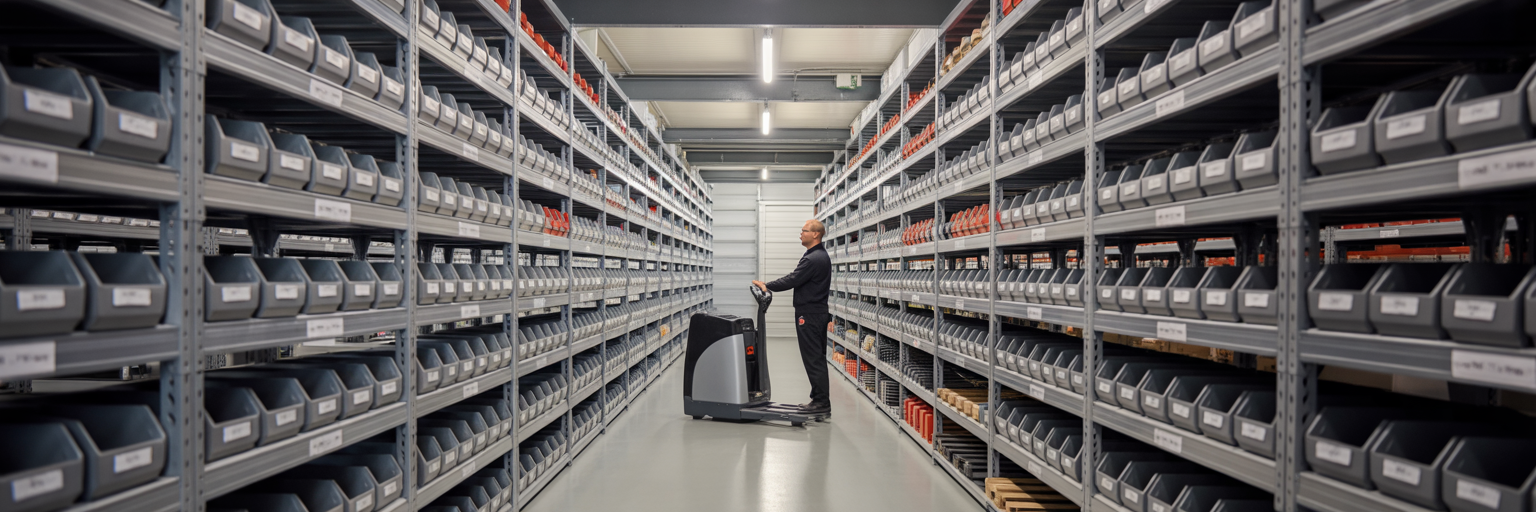
Retail stockroom inventory management.

The shift from reactive to proactive loss prevention is powered by one core asset: your point-of-sale data. Instead of treating transaction logs as a simple record of sales, predictive systems analyse them as a real-time stream of behavioural information. This is how raw POS data for loss prevention becomes a company’s first line of defence.

How Predictive POS Analytics Works

Modern POS systems are data hubs. They ingest multiple streams of information in real time including every transaction void discount return and employee login. A predictive analytics engine connects to this data feed and learns the normal operational rhythm of the business. It establishes baseline patterns for everything – from the average number of voids on a Tuesday afternoon to the typical discount level applied by a specific cashier.

From Anomaly Detection to Actionable Alerts

With these baselines established machine learning models begin their work. Their function is ‘anomaly detection’. They are not programmed with a list of known fraudulent behaviours. Instead they identify and score any transaction or sequence of events that deviates significantly from the established norm. As experts at Zebra Technologies note, the goal is to convert raw data into concrete alerts that stop issues at the moment of detection. A high-risk event – like an unusual number of voids followed by a cash drawer opening – triggers an immediate alert. These alerts are delivered through role-based dashboards. A loss prevention manager might see a heat map of high-risk stores while a store associate receives a simple notification on their handheld device about a specific transaction. This cuts the response time from weeks to seconds.

Key Metrics for Real-Time Shrink Monitoring

A predictive system is only as good as the actions it inspires. To be effective the insights must be translated into specific measurable KPIs that are monitored in real time. These metrics move the team from abstract analysis to concrete intervention. A dashboard that tracks the right KPIs allows supervisors to act before small anomalies become significant losses. For businesses operating across several locations, the ability to monitor these metrics from a central point is critical for maintaining consistent standards and identifying regional trends. This is where a robust system designed for multiple sites becomes invaluable.

The following table outlines the core metrics for a proactive shrink management dashboard. Each KPI provides a clear signal that prompts a specific operational response.

Key Predictive Shrink KPIs
KPI What It Measures Target Action
Anomaly Score per Register The frequency and severity of high-risk transactions at a specific POS terminal or by a specific user. Targeted training, register audit, or direct investigation.
Shrink-Rate Deviation The variance between the analytics model’s predicted shrink and the actual shrink discovered during stock counts. Refine the predictive model, adjust alert thresholds, or investigate new shrink patterns.
Time-to-Resolution The average time taken for staff to acknowledge and resolve a predictive alert from the moment it is issued. Improve staff training, simplify alert workflows, or assess alert relevance.

Integrating Analytics for an Enterprise-Wide View

High-value jewellery display counter.

The most advanced loss prevention strategies connect POS analytics with other core enterprise systems like Salesforce. This integration breaks down the data silos that often isolate loss prevention from sales and operations. The result is a unified data model that provides a complete view of risk across the entire business.

Consider a practical workflow. A high-risk transaction flagged by the POS analytics engine can automatically create a case in Salesforce. That case can then trigger an automated workflow – assigning a spot-audit task to the store manager and simultaneously notifying the regional loss prevention lead. As outlined in Salesforce’s own guidance on AI, a unified platform can funnel these risk scores directly into an enterprise analytics environment. When POS risk data is combined with CRM customer data and ERP inventory levels the business gains a true 360-degree perspective.

This approach is powerful but it is not without challenges. The credibility of the entire system depends on the quality and granularity of the source data. Gaps inconsistencies or inaccurate information can lead to a higher rate of false positives. If staff are constantly chasing alerts that turn out to be benign their trust in the system will quickly erode. Success requires a commitment to data hygiene from the ground up.

Building a Proactive Loss Prevention Strategy

The future of effective loss prevention lies in anticipation not reaction. Technology like predictive analytics for retail shrink is a formidable tool in this effort but it is not a standalone solution. Its true value is realised when it is paired with clear operational workflows and continuous staff training. The goal is to augment human oversight not replace it. A modern cloud POS system serves as the essential foundation for this strategy. It must be capable of capturing the clean granular transaction and inventory data needed to power sophisticated analytics engines.

Eposly provides the robust data infrastructure that enables retailers to move from reactive reporting to proactive prevention. Our systems are built to deliver the high-quality real-time data that is the lifeblood of any effective predictive analytics programme. To build the right data foundation for your loss prevention strategy, explore our comprehensive retail POS solutions.

Share this article

Eposly fills the checkout whitespace in Salesforce

As the only fully native point of purchase / POS solution, Eposly brings robust, secure checkout functionality to Industry, Sales & Service, and Experience Clouds, as well as CPQ and OMS.

The only 100% Salesforce-native checkout solution

Your customers don’t want to stand in line!

It has been a long understood that longer store lines or queues will result in loss of revenue....

Learn more about Eposly’s unique benefits for any industry.