Services
Salesforce-native POS and payments for healthcare and clinics
Take in-person, telehealth, and follow-up payments inside Salesforce, so every transaction becomes part of the patient record rather than landing in a separate POS system. Eposly is built for Salesforce-centric clinics and works on core Salesforce alongside Health Cloud.
What is a healthcare POS system, and can it run on Salesforce?
A healthcare point-of-sale (POS) system lets a clinic or healthcare service provider take payment for services, products, and patient balances. A Salesforce-native healthcare POS creates the order and transaction record inside Salesforce, linking payment to the existing patient record instead of maintaining a separate POS customer database.
In short, Eposly is healthcare POS software for Salesforce-centric clinics that need patient-linked payment execution across in-person and remote channels, on core Salesforce alongside Health Cloud.
How Eposly fits healthcare and clinics
Salesforce-centric clinics may already use Salesforce or Health Cloud to manage patient engagement, service history, follow-up, and commercial workflows. Payment is often the point where that process leaves the platform. Staff move into a separate terminal or payment application, the order context is split from the patient record, and finance may need to reconcile the transaction later.
With Eposly POS, clinic staff can create the order, take an in-person or remote payment, and issue a payment link as part of the same operational flow in Salesforce. The patient-linked order and transaction record are created in Salesforce, while payment credentials are handled and tokenized by the connected PCI-compliant provider. Eposly provides the Salesforce-native transaction layer for patient-linked orders and payments.
How payments connect to the Salesforce patient record
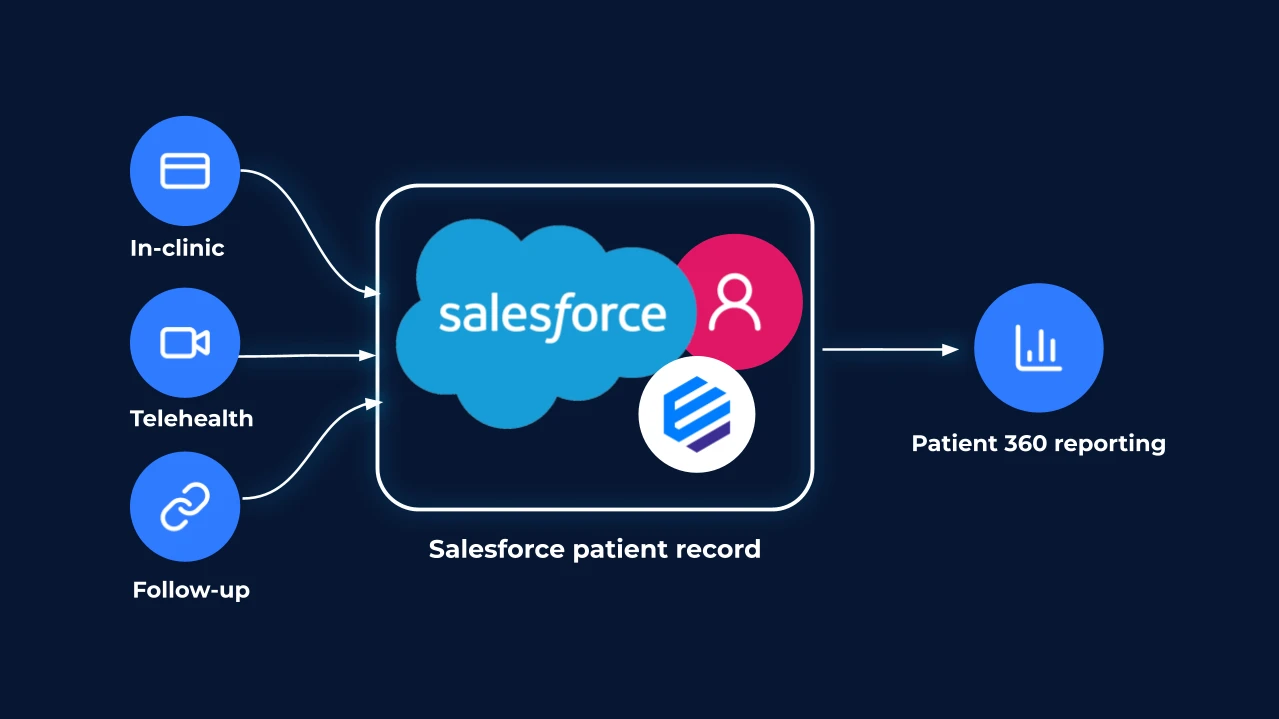
In-clinic, telehealth, and follow-up payments all recorded on one Salesforce patient record.
What you get and how Eposly works on Salesforce and Health Cloud
-
Patient-linked records in Salesforce
Patient-linked order and transaction records created in Salesforce, using the org's configured access controls, permissions, and available audit capabilities.
-
In-clinic, telehealth, and payment links
In-clinic, telehealth, and payment-link channels through one Eposly transaction flow.
-
PCI-compliant tokenization
The connected PCI-compliant payment gateway tokenizes card details; raw card details are not stored on the patient record.
-
Deposits, split payments, and follow-up links
Deposits, split and partial payments, refunds, and follow-up payment links on the patient-linked order.
-
Reporting across locations
Configure transaction reporting across locations using Salesforce patient, order, and payment records.
-
Card, contactless, and more
Card, contactless, and other methods supported by the connected gateway and terminal configuration.
Salesforce-native by design
Every element of the transaction is executed inside Salesforce. No parallel POS system, no reconciliation back from a separate database.
Native vs. Integrated POS-
Transaction records are created in Salesforce
Orders and patient-linked transaction records are created in the same Salesforce environment used for the wider workflow.
-
The existing patient record stays central
Eposly uses the existing Salesforce patient record rather than creating a separate POS customer database.
-
Payment credentials stay with the payment provider
The connected PCI-compliant gateway handles and tokenizes card details, while Salesforce stores the operational transaction record.
Used on Salesforce in a care environment
Omring uses Eposly to manage retail and rental transactions in a Salesforce Sales and Service Cloud environment. Eposly is also rated 5.0 from 26 reviews on the Salesforce AppExchange.

Questions buyers ask
Explore capabilities and use cases
Simplify your healthcare service and checkout process
Eposly fits Salesforce-centric clinics and healthcare service providers that run Salesforce or Health Cloud, take patient payments in person and remotely, often across multiple locations, and want every transaction connected to the patient record instead of a separate POS system.