Industries
Specialty retail POS that runs the whole sale inside Salesforce
Configure products, apply pricing and take payment in Salesforce, with the details of each sale linked to the client record.
Try the interactive demoTalk to us →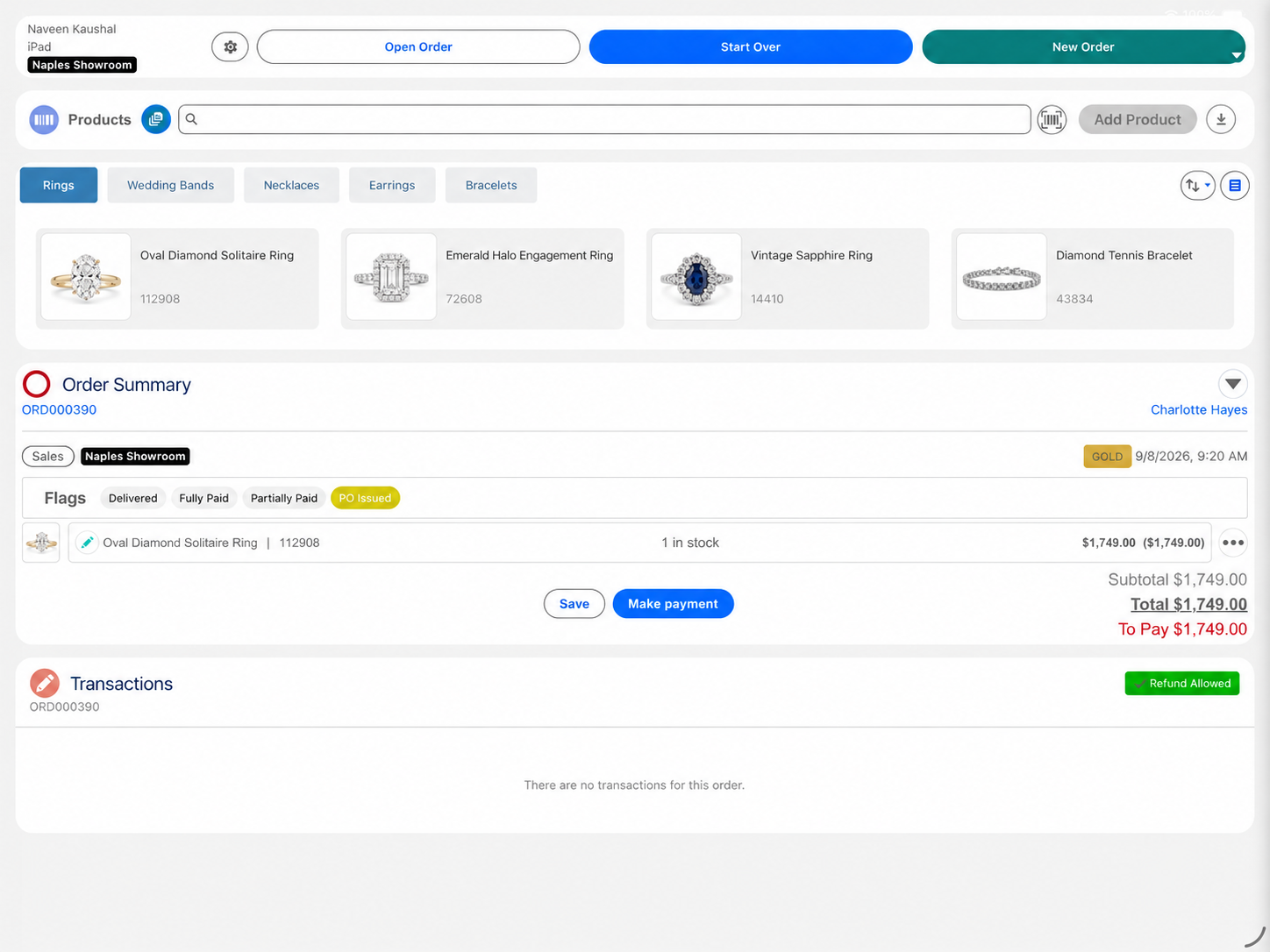
Eposly is a specialty retail POS built for stores where the sale needs a conversation. Staff configure the item, apply pricing, take payment and create the order on the client's Salesforce record, in one flow. Deposits, part-payments and scheduled card payments are recorded against the client record in Salesforce, with no separate POS database to reconcile.
- Runs inside Salesforce, under your Salesforce permissions and audit controls
- Configured items and price adjustments are recorded with the sale
- Deposits, split tender, part-payments and scheduled card payments on the client record
- Staff see purchase history and preferences during the sale
- Rated 5.0 on the Salesforce AppExchange
Which specialty retail businesses does Eposly work with?
Eposly fits retailers whose sales are assisted, considered and tied to a known client. Choose your business type.
What does a specialty retail counter need from a point of sale?
A specialty retail POS has to carry the context of the sale, not just the total: who the client is, what was configured, how the price was reached, and how the balance will be paid.
That is the difference from a standard retail POS. A standard POS is built for fast, anonymous checkout of fixed-price items. Specialty retail sells through conversation, options change the price, and the client comes back.
How does one sale work from start to finish?
- 01
Find the client
The associate opens the client's Salesforce record on a tablet or at the counter. Past purchases, preferences and any open orders are on screen.
- 02
Build the item
- 03
Agree the price
- 04
Take payment
- 05
Create the order
- 06
Send the receipt
- 07
Pick up from the record
Payments
How are payments taken, including deposits and recurring payments?
For orders involving deposits, part-payments or balances, Eposly records each payment against the order in Salesforce.
- DepositsTake a deposit in the payment step. The order carries a deposit status, and staff mark it finalized or picked up when the client completes it.
- Part-payments and balancesCollect the balance at the next visit, or send a pay-by-link for part or all of the outstanding amount.
- Split tenderCard, cash and gift card in one transaction.
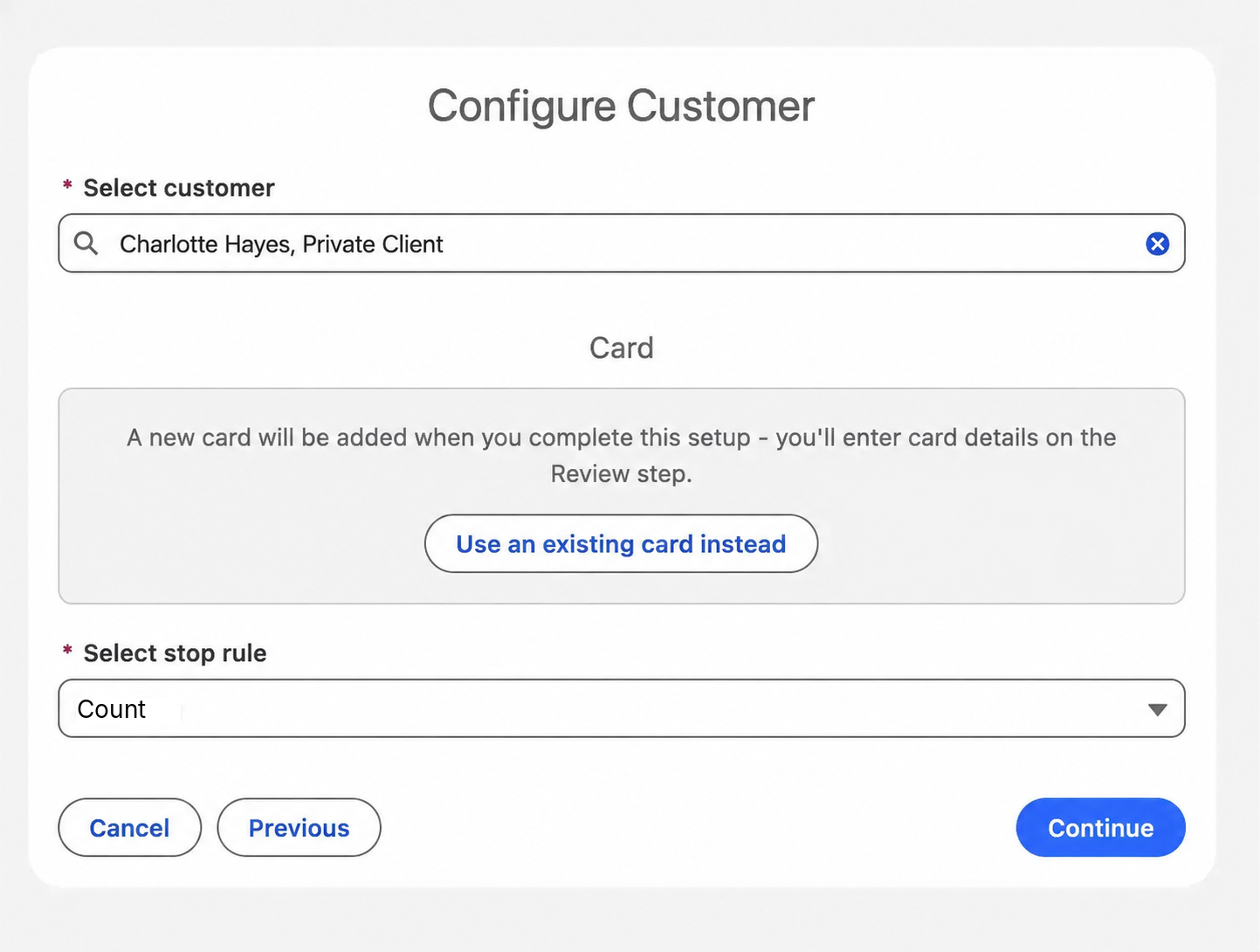
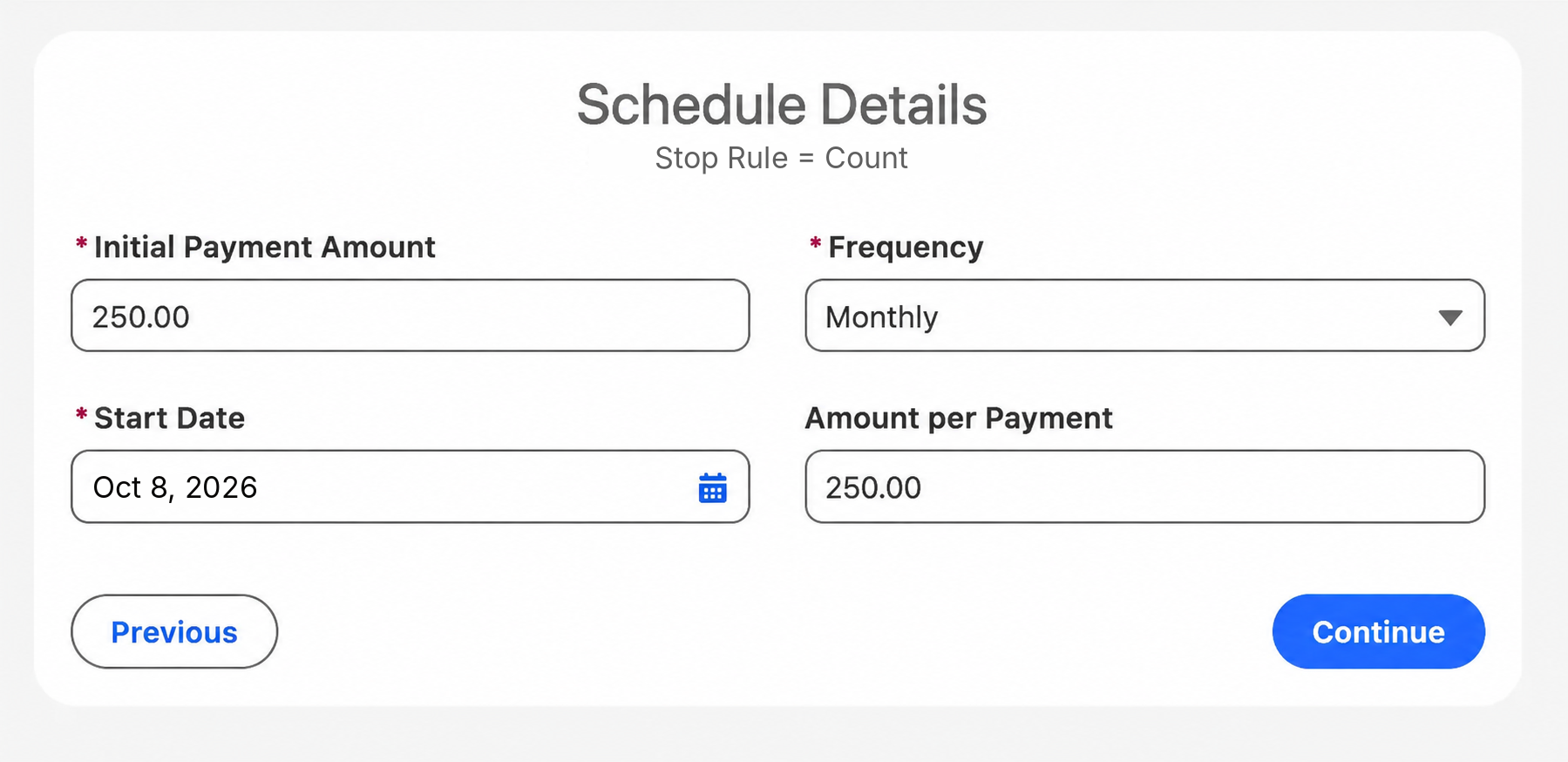
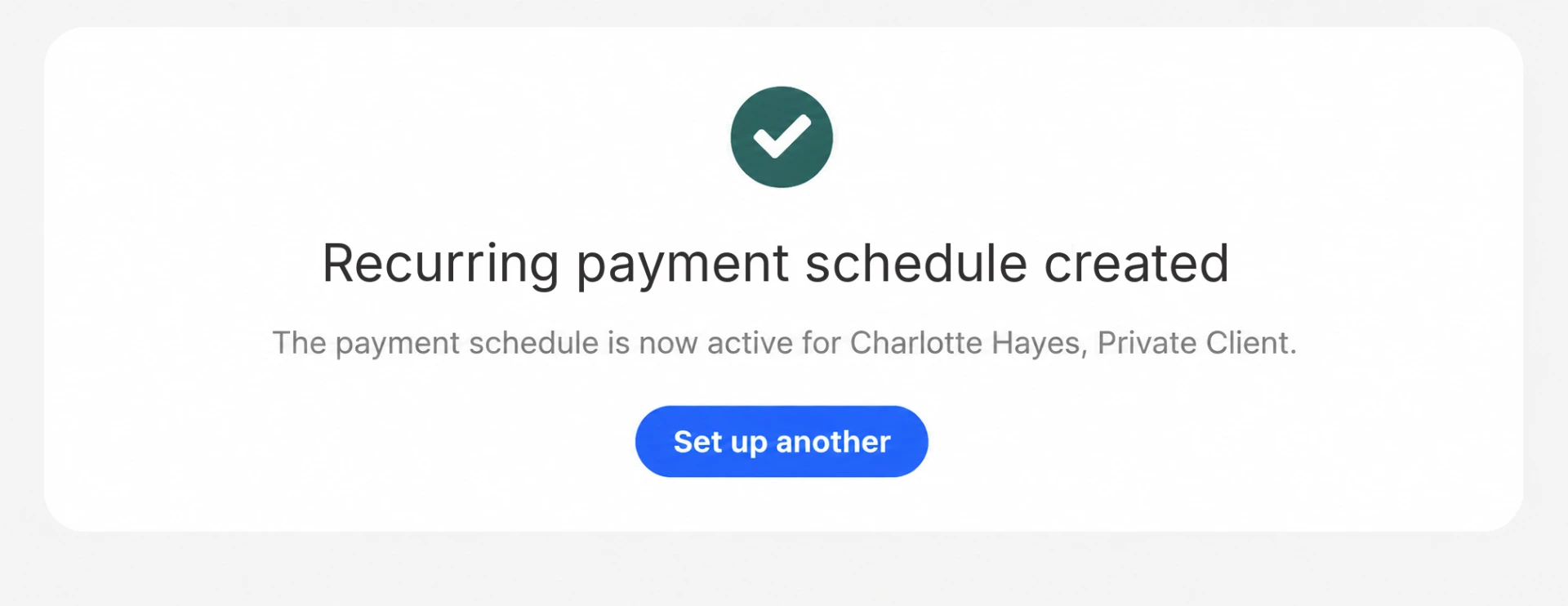
- Scheduled card paymentsNewSet up a schedule on the client's saved card, for example a payment plan on a high-value piece, directly from the order. A failed collection pauses the schedule and shows in a Salesforce report for follow-up. Recurring schedules run with a supported payment provider.
Every payment is recorded against the order and the client record in Salesforce, so the balance and payment history sit next to the order.
How many systems does a specialty retail counter actually need?
Fewer than most retailers run. When the transaction runs inside Salesforce, the separate POS database and the sync that keeps it aligned drop out.
Eposly does not replace the ERP, warehouse or finance system. It replaces the separate POS and the work of keeping it aligned with Salesforce.
What does the record and audit trail show?
After every sale, the Salesforce record shows:
- Who the client was, and which associate made the sale, at which store.
- What was sold and how it was configured.
- The price, and any adjustment.
- How it was paid: methods, deposit, balance and any recurring schedule.
- The order and its status through fulfillment or pickup.
- Refunds and returns against the original order.
Because these are standard Salesforce records, they follow your Salesforce permissions and audit controls, and finance can report on them without exporting from a separate POS. Card details are tokenized by the connected PCI-compliant payment provider and kept out of the client record.
Eposly is transforming our business. Enabling retail stores to connect better with customers and allow us to meet critical distributor KPIs.Jo Cameron, Digital Transformation Lead, DMR

David M Robinson, a European fine jewelry and watch retailer, runs its stores on Eposly. Management sees sales by store, client and associate in real time.
QLF Brands, a Dutch homewares and lighting retailer, runs Eposly across its showrooms, warehouse and online store. QLF reports 125% more time spent with customers and 50% less time lost on fulfillment management.
 5.0 on Salesforce AppExchange
Specialty retail one-pager
Take this page to your team
The key points of this page in one document to share with your team, including the specialty retail businesses we cover.
By downloading, you agree to our privacy policy.
Is Eposly the right fit for your business?
Eposly fits specialty retailers that:
- Run Salesforce as the system for their clients, not only for reporting
- Sell through assisted conversations, often with configuration or price discretion
- Take deposits, hold open orders or collect balances later
- Want the sale on the client record so the next conversation starts from it
Another option is a better fit when:
- Checkout is high-volume, anonymous and fixed-price, with many registers per store
- The business does not run Salesforce, or plans to leave it
- The stores must run offline as their main mode
- Local law requires a fiscalized POS, as in parts of the EU
One note for planning: every associate who sells through Eposly needs a Salesforce user license.
Questions buyers ask
Can Eposly handle configurable, high-consideration sales?
Yes. Staff configure the item, options update the price, and any adjustment is recorded with the sale. The order can stay open with a deposit until the item is ready.
Does Eposly replace a traditional retail POS?
Yes, for assisted specialty retail. Eposly takes the place of the separate POS and runs the sale inside Salesforce. It does not replace your ERP, warehouse or finance system.
Does Eposly replace clienteling tools?
No. Clienteling tools act on client data. Eposly makes that data complete by recording what was configured, priced and bought on the client record at the moment of sale.
Can Salesforce be used as a POS system for retail?
Salesforce on its own is a CRM. With Eposly installed, retail teams configure, price, take payment and create the order inside Salesforce, so Salesforce becomes the point of sale.
Can we keep our existing payment processor?
In most cases, yes. Eposly connects to PCI-compliant payment providers including Stripe, Adyen, Square, CardConnect and Cybersource, so many businesses keep the processor and rates they already have. Eposly doesn't take a fee on each transaction. If you use another provider, ask us and we'll confirm whether it's supported.
Related reading
Bring your hardest specialty retail sale
Show us how your associates sell today. We will walk through the same sale in Salesforce: client, configuration, price, deposit and order.